

 Jul 20, 2026
 8 min read


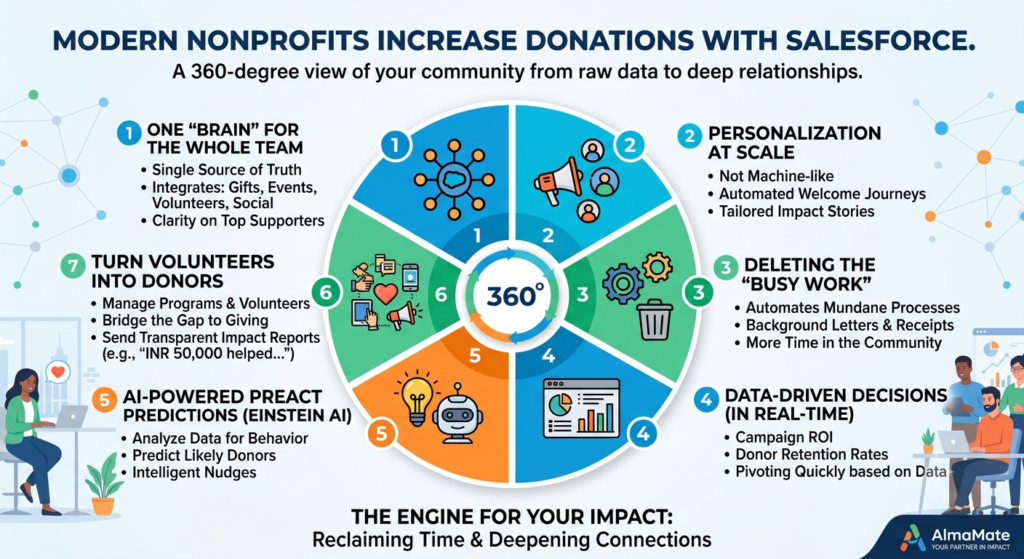
For nonprofits today, raising money has changed. To grow in a digital world, you need to deeply understand your supporters—what gets them excited, when they like to hear from you, and exactly when they are ready to step up and lead.
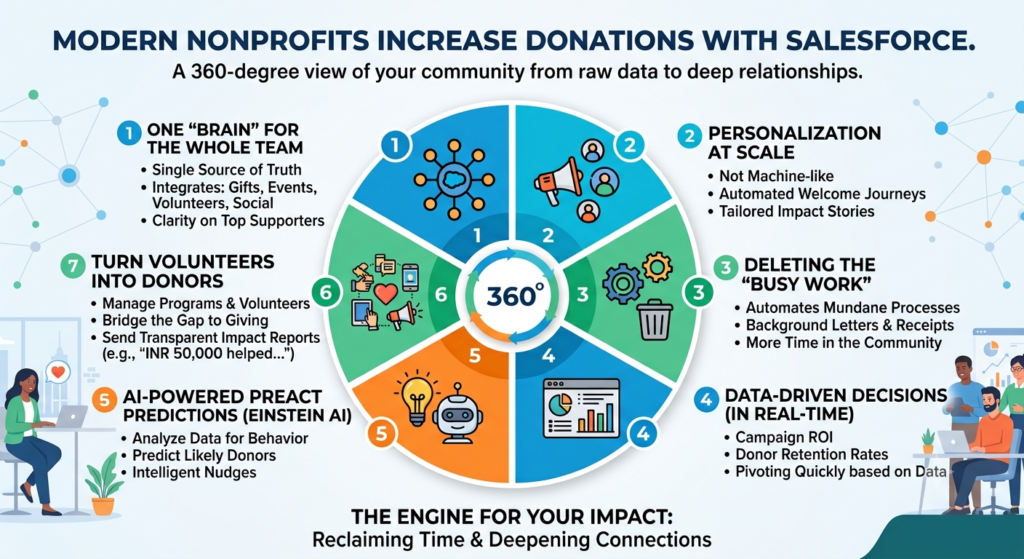
As the world moves faster, traditional tools like “The Master Spreadsheet” or basic email blasts just can’t keep up. They leave your team guessing and your donors feeling like just another number in a row. This is why so many organizations are turning to Salesforce.
Salesforce isn’t just a tech platform; it’s a way to build a 360-degree view of your community. It takes the “noise” of raw data and turns it into a clear roadmap for building relationships. For teams running on thin margins and big dreams, this shift is a total game-changer.
1. One “Brain” for the Whole Team
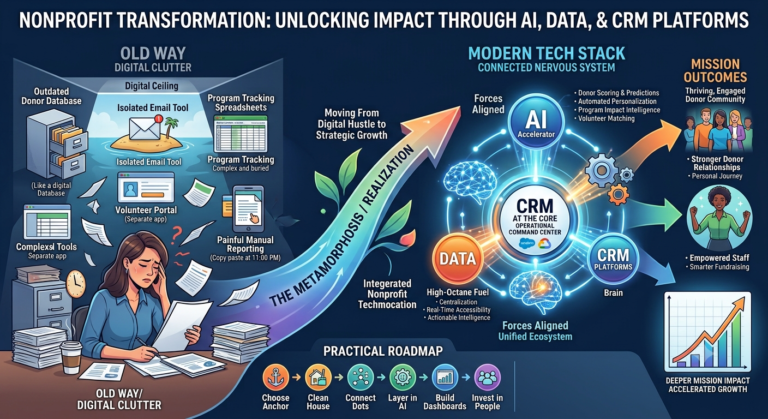
The biggest headache for most nonprofits is fragmented info. You have a donor list in an Excel file, a volunteer list in another, and a separate platform for event tickets. If a donor also volunteers, you might never know it.
Salesforce creates a Single Source of Truth. It brings every interaction—past gifts, event attendance, volunteer hours, and even social media clicks—into one place. When your team has this clarity, they stop guessing who their top supporters are. They know exactly who needs a phone call and who is ready to be asked for a major gift.
2. Personalization That Doesn’t Feel “Machinelike.”
Generic email blasts are the quickest way to make a donor feel unappreciated. People expect you to know who they are. Salesforce allows you to deliver “personalization at scale.”
For example, when someone gives for the first time, the system can automatically trigger a “Welcome Journey” that shares impact stories specifically related to the project they funded. Meanwhile, your recurring donors get a different set of updates that celebrate their long-term loyalty. It’s about sending the right message to the right person at the right time—without your staff having to hit “send” multiple times.
3. Deleting the “Busy Work.”
Most nonprofit staffers spend hours reconciling payments, manually typing in addresses, or hunting down tax receipts.
Salesforce automates the mundane and repetitive business processes. Acknowledgement letters, pledge reminders, and event confirmations can all run in the background. When you automate the administrative grind, you give your fundraisers their time back. That’s the time they can spend in the community to focus on activities that bring in the money.
4. Decisions Based on Real Life, Not Just Hunches
Reporting shouldn’t take a week of preparation. With Salesforce dashboards, leadership can see exactly what’s working in real-time.
- Which campaign had the best ROI?
- Is our donor retention rate slipping?
- Are we on track for our year-end goal?
Having this data at your fingertips means you can pivot quickly. If a specific outreach effort isn’t landing, you’ll know by Tuesday, not two months later.
5. Using AI to Work Smarter (Einstein AI)
One of the coolest parts of Salesforce is Einstein AI. It sounds futuristic, but its job is very practical: it analyzes your data to predict behavior. It can flag which donors are most likely to give this month or identify supporters who are starting to disengage so you can reach out before they’re gone. These “intelligent nudges” help small teams prioritize their energy where it will have the most impact.
Supporters don’t just exist in an inbox. They are on Instagram, they are at your events, and they are reading your texts. Salesforce unifies these channels so your message stays consistent. Whether they pay via a QR code or via a link in a text message, the history is captured in one profile. This “multichannel” approach makes it much easier to roll out and run coordinated drives.
7. Turning Volunteers into Lifelong Donors
Donors give more when they are apprised of the objectives of the mission. By managing programs and volunteers in the same system as your fundraising, you can bridge the gap between doing and giving. When a volunteer has a great experience, Salesforce can help you invite them to become a recurring donor. When you track program outcomes, you can send a donor a report that says, “Here is exactly how many people your INR 50,000 helped today.” That transparency builds unbreakable trust.
Conclusion: The Engine for Your Impact
Modern nonprofits are moving away from “survival mode” and into “strategic mode.” By using Salesforce as a fundraising engine, they aren’t just managing data—they are reclaiming their time and deepening their connections.
Salesforce isn’t just a technological upgrade; it’s a way to ensure that your mission has the resources it needs to thrive in a competitive world. It’s about moving from “we think this might work” to “we know how to grow.”
Ready to elevate your fundraising with Salesforce?
At AlmaMate, we don’t just implement software—we help you build a culture of data-driven impact. Whether you are migrating from spreadsheets or looking to unlock the power of Einstein AI, our team is here to ensure Salesforce works for your mission, not the other way around.