

 Jul 22, 2026
 8 min read


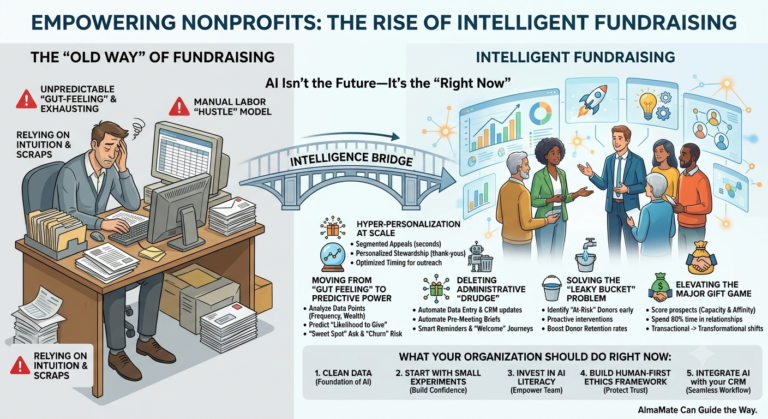
For decades, fundraising has been a slightly chaotic mix of intuition, history, and old-fashioned relationship building. We’ve all been there: sitting around a conference table, looking at a spreadsheet of donors who contributed last year, who showed up at the annual gala, and using our “sixth sense” to guess who might be ready for the next big ask. It’s a method built on heart, and it has kept vital missions alive for a long time.
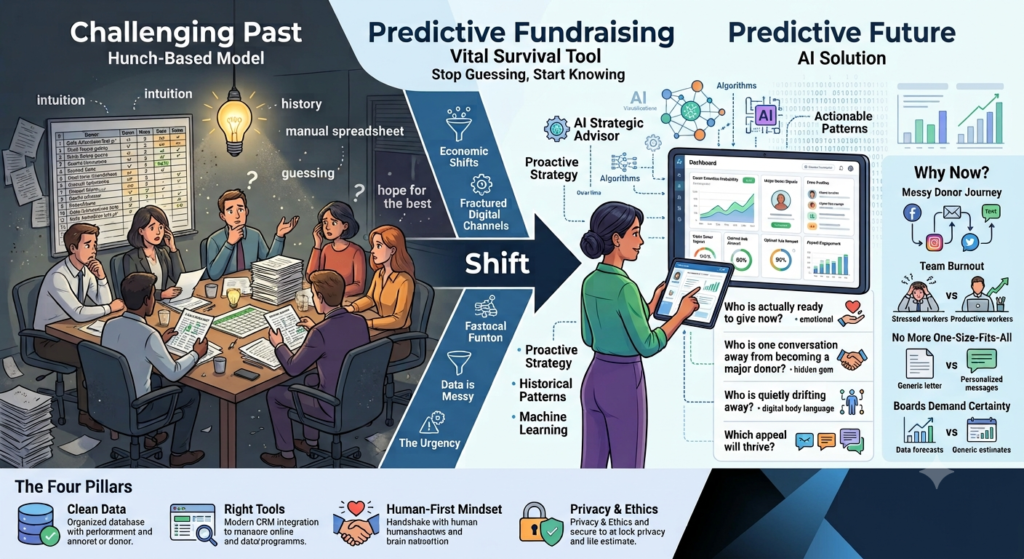
But if we’re being honest with ourselves during a late-night office session, that “hunch-based” model is starting to show its age.
The world has changed. The modern donor is harder to pin down; they are cautious due to economic shifts, and their attention is fractured across dozens of digital channels. Meanwhile, nonprofit teams are being squeezed—asked to do more with less while somehow being expected to predict exactly how much money will be in the bank by the end of the fiscal year.
This is where predictive fundraising moves from being a “tech luxury” to a vital survival tool. It’s not just another AI buzzword designed to sell software; it’s a way to use the data you already have to stop guessing and start knowing. It’s about moving from a reactive “hope for the best” mindset to a proactive, intelligent strategy.
What Are We Actually Talking About?
At its core, predictive fundraising uses historical patterns and machine learning to forecast what your donors will do next. It moves past “feelings” by analysing thousands of data points—donation history, wealth markers, email engagement, and even digital behaviour—to find the signals that we, as humans, usually miss.
Think of it as a strategic advisor sitting inside your database, answering the questions that usually keep you up at night:
- Who is actually ready to give right now? Not just who can give, but who is emotionally and behaviourally ready to hit the “donate” button today.
- Who is one conversation away from becoming a major donor? We often miss the “hidden gems” in our mid-level pools because we’re too busy chasing the same ten big names everyone else is chasing.
- Who is quietly drifting away? It’s much cheaper to keep a donor than to find a new one. AI can spot the “digital body language” of someone about to lapse long before they actually stop giving.
- Which appeal is going to thrive? Instead of a “spray and pray” approach to direct mail or email, you can know which message will resonate with which segment.
It’s not about replacing the fundraiser; it’s about giving the fundraiser a map, so they stop wandering in the dark.
Why the Urgency? Why Now?
Data modelling has existed for a while, but the recent leaps in AI have made these tools incredibly fast and—more importantly—affordable for nonprofits that don’t have massive IT departments. Here is why this shift is becoming non-negotiable for survival:
1. The “Messy” Donor Journey
The days of a linear path—see an ad, get a letter, send a check—are gone. Today, a donor might see you on Instagram, read your email on their phone, forget about it, and then finally donate via a text link three weeks later. Keeping track of that journey manually is a nightmare. Predictive models work in the background to connect these dots, giving you a holistic view of how a donor actually interacts with your brand.
2. Burnout is a Crisis
Fundraising teams are stretched to the breaking point. You simply cannot call every single person in your database. Predictive tools act as a force multiplier; they tell you exactly who to prioritise so you aren’t wasting hours on dead ends or cold leads. It allows your team to focus their limited energy where it will actually make an impact.
3. The Death of “One-Size-Fits-All”
In a world of Netflix and Amazon, your supporters expect you to know them. Sending a generic “Dear Friend” letter to a ten-year donor feels like a slap in the face. Basic segmentation based on age or location doesn’t cut it anymore. You need to segment basis intent and affinity.
4. Boards Demand Certainty
Gone are the days when a “we hope to raise INR 10,00,000 by the end of this campaign” was enough for a board meeting. Modern boards want data-backed forecasts. They want to know the probability of hitting targets so they can plan programs, hires, and expansions with real confidence.
How This Changes Your Daily Work
Predictive intelligence isn’t just about high-level strategy; it changes the “boots on the ground” work in several major ways:
Targeting the Right People
Instead of blasting your entire mailing list and hoping for a 2% return, you can focus on the prospective donors who are highly likely to donate. This doesn’t just save money on printing and postage; it protects your reputation. You stop annoying the donors who aren’t ready to give, ensuring that when you do reach out, they are actually listening.
Saving Lapsing Donors
AI can see the “digital body language” of a donor who is about to quit—maybe they’ve stopped opening your newsletters or haven’t visited your website in months. This gives you a window of opportunity to reach out with a “thank you” or a personal update before they’ve officially moved on.
Finding Your “Hidden Gems”
Every database has them: the INR 1000-a-month donor who has been giving faithfully for five years, opens every email, and attends every virtual town hall. They have high “affinity” but haven’t been asked for a major gift because their “wealth markers” didn’t scream millionaire. Predictive analytics finds these people hiding in plain sight.
Asking for the Amount
One of the hardest parts of fundraising is the “ask” amount. Ask for too little, and you leave money on the table; ask for too much, and you might offend or scare off the donor. AI suggests the “just right” number based on their actual giving capacity and past behaviour.
The Foundation: What Do You Need to Start?
You can’t just flip a switch and have AI solve everything. Like any powerful tool, it requires a solid foundation. If you want to move into predictive fundraising, you need to focus on four pillars:
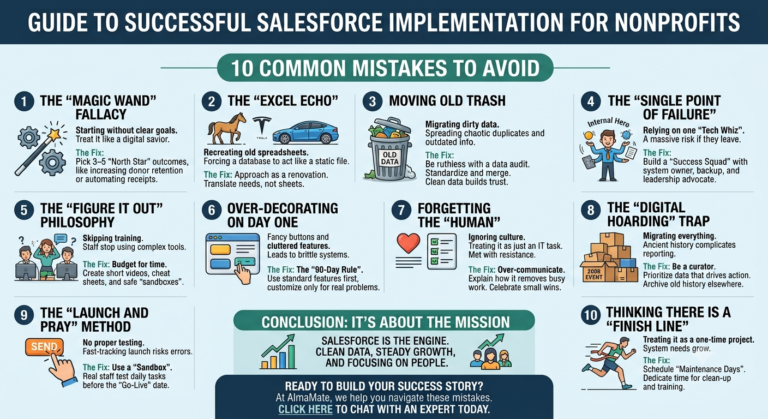
- Clean Data: This is the most unglamorous part of the job, but the most essential. If your CRM is a mess of duplicates, missing dates, and incorrect addresses, the predictions will be wrong. Garbage in, garbage out.
- The Right Tools: Your CRM needs to be modern enough to integrate with predictive software. You don’t need the most expensive system on the market, but you do need one that plays well with others.
- A Human-First Mindset: This is the most important point. AI provides the score, but a human still has to make the connection. The data tells you who to call; it doesn’t tell you how to care. The real magic happens when data meets empathy.
- Privacy and Ethics: As we use more data, we must be more protective of it. Transparency is key. Trust is the only currency that truly matters in the nonprofit sector, and once it’s broken, none of the AI bots can fix it.
How to Get Moving (Without Overwhelming Your Team)
You don’t need a massive, million-dollar overhaul to start. In fact, starting small is often better.
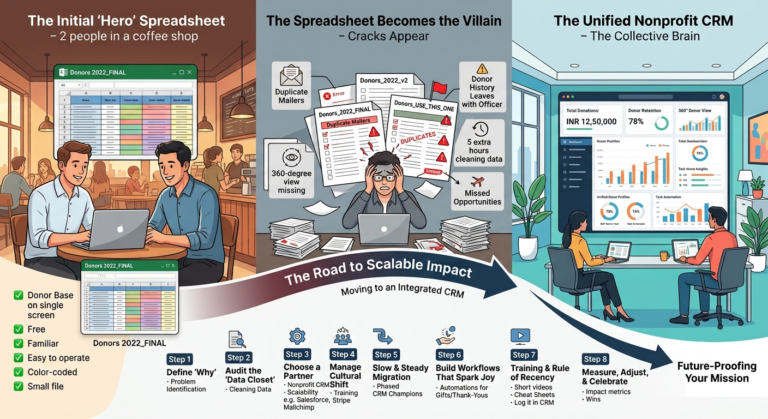
- Step 1: The Audit. Take a hard look at your data. How much of it is actually usable? Start by cleaning up your most recently created records over the past 2 years.
- Step 2: The Pilot. Pick one specific problem to solve. Maybe you want to identify which donors are “at risk” of leaving. Run a small pilot where you use predictive scoring to flag these donors and send them a personal, non-solicitation video update.
- Step 3: Measure and Scale. Once you see a win—like a higher retention rate in that pilot group—you can start expanding into major-gift pipelines and revenue forecasting.
The Big Picture:
The future of fundraising isn’t about replacing people with robots. It isn’t about turning our donors into rows on a spreadsheet or losing the “soul” of our missions. In fact, it’s quite the opposite. By using technology to handle the boring, soul-crushing data-crunching, we free up our fundraisers to get back to what they do best: building real, human connections. When you aren’t spending forty hours a month trying to figure out who to call, you can spend those forty hours actually having meaningful conversations with people who care about your cause.
The organisations leaning into this now are already seeing better retention and healthier pipelines. Those who wait are going to find themselves working twice as hard for half the results in a sector that is rapidly becoming data-intelligent.
Ready to Stop Guessing?
At AlmaMate, we don’t just talk about the theory of AI and data. We help nonprofits actually roll up their sleeves and implement these systems. We know that every organisation is different, and a “cookie-cutter”/ “standardised” approach never works.
Whether it’s cleaning up a messy Salesforce instance, integrating your digital tools, or setting up your very first predictive model, we make the tech work for you—not the other way around. Our goal is to give you the clarity you need to spend more time in the field and less time in the database.
Don’t let your data sit idle. Let’s turn it into your biggest competitive advantage. Reach out to AlmaMate today for a chat. Let’s build a future where you stop hoping for the best and start working towards your mission’s success.